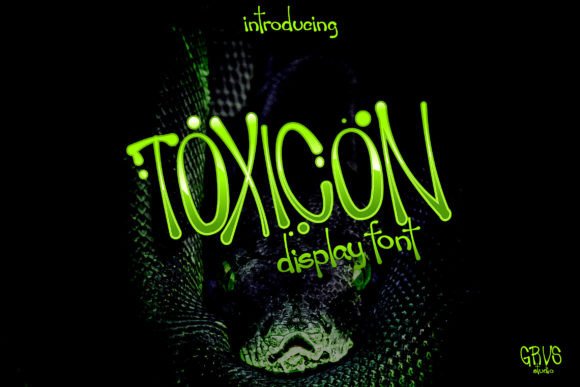
Toxicon Font: A Psychedelic Powerhouse for Bold Branding
Every designer hits a wall. You're staring at a blank canvas, trying to create a logo for a new community, a sticker for a music festival, or a jersey for a local sports team, and every font you try feels... safe. Too corporate. Too generic. You need something with an edge, a typeface that vibrates with energy and immediately tells your audience, "This is different." This is the exact problem the Toxicon font was designed to solve. It's not just a collection of letters; it's a visual statement, a premium font that injects a distinct psychedelic flair directly into your creative projects.
Understanding the Toxicon Vibe
At its core, Toxicon is a display typeface, which means it's built for headlines, logos, and short bursts of impactful text rather than long paragraphs. Its design philosophy pulls from the swirling, organic forms of psychedelic art—think bold curves, unusual letter structures, and a sense of movement. This isn't your typical sans serif font for body copy. It's a creative font with a personality that's both retro and surprisingly modern. The visual characteristics are what make it stand out: letters might feature subtle warps, fluid connections, or a weight that feels alive. This makes it an excellent choice for projects where you want to evoke a sense of creativity, rebellion, or artistic freedom.
From Community Logos to Concert Posters
Let's talk practical application. Imagine you're designing a logo for a local gaming community or a band. Toxicon’s unique letterforms create a memorable brand identity that members will instantly recognize on a Discord server or a concert flyer. For a startup selling eco-friendly skateboards or artisanal hot sauces, using Toxicon on packaging design and labels can communicate a hand-crafted, counterculture vibe that a standard font simply can't. The same goes for merchandise: t-shirts, hoodies, and stickers featuring typography with this much character become wearable art that people actually want to show off.
Beyond physical products, this typeface excels in digital spaces. Social media graphics are a battle for attention in a crowded feed. A post or story header set in Toxicon can stop the scroll, making your content for a podcast, YouTube channel, or online course feel more dynamic and professional. On a website, it can be used sparingly but effectively for hero section headlines, adding a punch of personality that sets the tone for your entire brand experience. Think of a blog about psychedelic music history or a digital shop selling unique art prints—Toxicon helps establish the editorial design mood before a single word of content is read.
Making It Work: Pairing and Practicality
The power of a bold font like Toxicon comes with a responsibility to use it wisely. Its strength is in grabbing attention, but that can become overwhelming if used for large blocks of text. The key to successful font pairing is contrast. Pair Toxicon with a clean, highly readable sans serif font or a simple serif font for body copy. This creates a visual hierarchy where the headline sizzles and the supporting text is easy to digest. For example, use Toxicon for the main logo and event name, but choose a font like Open Sans or Lora for the details on an invitation card or brochure.
Before you commit, always test your font pairings in context. Mock up your design for a jersey, a website header, and a social media post side by side. Check the readability at different sizes. A font that looks magnificent at 72pt on a poster might lose its clarity when scaled down for a business card. Toxicon is designed to maintain its impact, but this kind of due diligence separates good design from great design. Review all the included font styles—does it come with alternate characters, ligatures, or multiple weights? These extras can give you more flexibility to fine-tune your typography.
Beyond Aesthetics: The Business of Branding
Choosing a typeface is a business decision, not just an artistic one. Visual consistency across all touchpoints—your logo, website, social media, and print materials—builds brand recognition. When a customer sees your distinct Toxicon-styled headline on an Instagram ad and then again on product packaging, it reinforces your identity in their mind. This consistency makes your small business or creative project look established and professional, which builds trust. In marketing, a strong visual identity crafted with a unique font can improve audience engagement because it signals that you have a clear point of view.
Finally, practical considerations matter. If you plan to use Toxicon for commercial projects like client work or selling merchandise, you need to ensure you have the proper commercial license. Most reputable font marketplaces offer this, so always read the licensing terms. Investing in a quality commercial font is an investment in your brand's legal and visual foundation. It ensures you can use your designs confidently without worrying about copyright issues down the line.
Ultimately, Toxicon is more than just a creative asset; it's a tool for storytelling. It gives designers, entrepreneurs, and creators a way to visually articulate concepts of energy, individuality, and artistic expression. Whether you're building a brand from the ground up or refreshing an existing one, having a typeface in your toolkit that breaks the mold can be the catalyst for your most compelling work. It’s about finding the right voice for your visual communication—one that resonates with your audience and makes your project unmistakably yours.