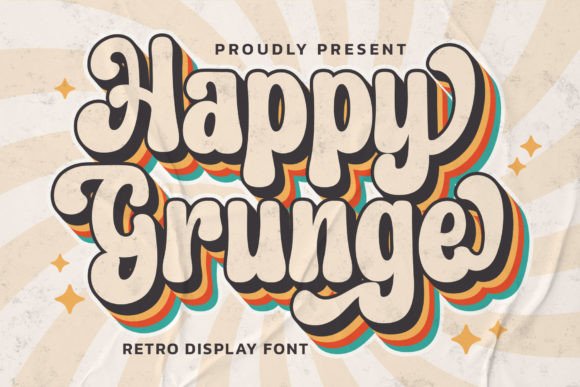
Happy Grunge: A Groovy Display Font for Bold, Retro Designs
Sometimes a project calls for a typeface that doesn't just sit quietly in the background—it needs to jump off the page with personality. If you're working on a design that aims to feel energetic, nostalgic, or unmistakably fun, you've probably spent hours scrolling through font libraries searching for that perfect match. Happy Grunge is one of those finds that stops the scroll, a display typeface built for moments when subtlety isn't the goal and your audience needs to feel something the instant they see your work.
What Makes This Typeface Stand Out
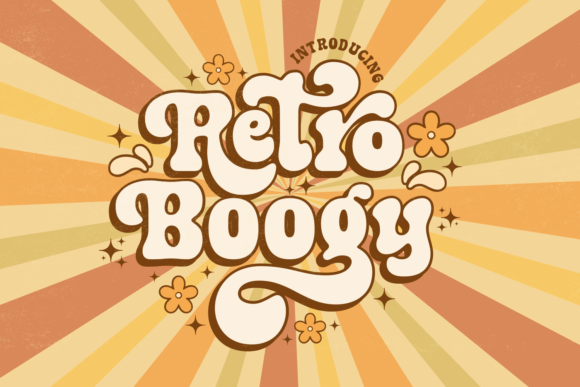
Happy Grunge is a fun and groovy display font with a funky style that blends retro charm with a slightly distressed, textured edge. The letterforms carry a playful weight—rounded where it counts, bold enough to command attention, and textured enough to feel handmade rather than sterile. It sits in that sweet spot between a vintage concert poster and a 1970s cereal box, which gives it a warmth that many modern typefaces lack.
What sets it apart visually is the combination of its groovy proportions and the subtle grunge detailing. The characters feel like they've lived a little—they have personality without being sloppy. This isn't a font that tries to look clean or corporate. Instead, it leans into its character, making it ideal for projects where authenticity and energy matter more than polish.
Where This Font Really Shines
The practical applications for a typeface like this are surprisingly broad. Yes, it's perfect for creating t-shirts, stickers, and children's book covers, but its usefulness extends well beyond novelty merchandise. Here's where designers, creators, and business owners are putting it to work:
- Branding and logo design for businesses that want to project a laid-back, approachable, or youthful vibe—think coffee roasters, indie record shops, craft breweries, or children's activity centers.
- Packaging design where shelf appeal is everything. A granola bar, a candle, or a specialty hot sauce with this kind of typography tells the customer exactly what kind of brand they're dealing with before they read a single word.
- Social media graphics that need to cut through endless scrolling. Bold display fonts like Happy Grunge work exceptionally well for Instagram stories, quote graphics, sale announcements, and event promos.
- Print materials including posters, flyers, event invitations, and editorial layouts where a headline needs to do heavy lifting.
- Digital products such as downloadable planners, worksheet headers, podcast cover art, and blog graphics that need a distinctive visual identity.
- Merchandise and print-on-demand projects where a single font choice can define an entire product line.
For anyone building a brand identity from scratch or refreshing an existing one, a creative font like this can anchor the entire visual language. It gives you a recognizable starting point that other design decisions—color palettes, illustration styles, photo treatments—can grow from.
Pairing It With Other Typefaces
No display font works in isolation, and one of the most common mistakes in design is using a bold, personality-driven typeface for every single piece of text. Happy Grunge works best as the headline or accent font, paired with something more restrained for body copy. A clean sans serif font or a simple serif font provides the contrast that lets the display typeface do its job without overwhelming the reader.
For example, if you're designing a social media post, use Happy Grunge for the main headline or call to action, then set the supporting details—date, time, location, or a brief description—in a straightforward sans serif. The contrast creates visual hierarchy naturally, guiding the viewer's eye exactly where you want it to go.
When testing font pairings, set them side by side at the actual size they'll appear. What looks balanced in a 200-point preview on your screen might feel completely different at 14 points on a printed flyer. Pay attention to x-height, letter spacing, and overall weight. The goal is harmony, not competition between your typefaces.
Readability Considerations for Real Projects
Display fonts are built for impact, not for paragraphs. That's an important distinction. Happy Grunge excels in short bursts—a headline, a product name, a tagline, a single-word emphasis. Where you want to be cautious is in using it for longer passages of text, small sizes, or situations where quick legibility matters (think navigation menus, legal disclaimers, or instructional text).
This isn't a limitation—it's how display typography works. The same principle applies to virtually every premium font in this category. A script font that looks gorgeous on a wedding invitation would be nearly unreadable as body text on a website. Understanding where each typeface belongs in your design system is what separates thoughtful typography from a jumbled mess.
For print projects, always do a physical test print if possible. Screen rendering and ink on paper behave differently, especially with textured or distressed fonts. What reads clearly at 72 dpi on a monitor might lose some of its detail at 300 dpi on matte paper, or conversely, the texture might become more pronounced and charming.
Understanding the PUA Encoding Advantage
One practical detail worth noting: Happy Grunge is PUA encoded, which means every glyph—including alternates, ligatures, and special characters—is fully accessible without needing advanced design software. Whether you're working in Adobe Illustrator or a simpler platform like Canva, you can access the complete character set. This matters because some fonts include beautiful alternate characters that remain locked away unless you know how to navigate OpenType features. PUA encoding removes that barrier entirely, giving you full creative freedom regardless of your technical skill level or software choice.
This is particularly useful for small business owners and content creators who might not have years of experience with typography tools but still want professional-looking results. You get access to every stylistic option the typeface offers, which means more creative possibilities without a steeper learning curve.
Licensing and Commercial Use
If you're planning to use this typeface for client work, merchandise, or any commercial application, always verify the licensing terms before purchasing. Most premium font licenses distinguish between personal and commercial use, and some have specific restrictions around embedding in digital products or using the font in templates for resale. Read the license agreement carefully. It's a small step that protects both you and your clients, and it's a professional habit that pays off long-term.
Matching Typography to Your Project Goals
Choosing the right font style ultimately comes down to one question: does this typeface communicate the feeling you want your audience to have? A children's book cover needs warmth and playfulness. A vintage-style t-shirt needs authenticity and attitude. A social media campaign for a new product launch needs energy and confidence. Happy Grunge answers several of those calls in a way that feels genuine rather than forced.
The best design choices are intentional. Before selecting any typeface—whether it's this one, a handwritten font, or something entirely different—get clear on your project's personality, your audience's expectations, and the context where they'll encounter your work. A font that perfectly suits a poster might be completely wrong for a website header, even if it looks beautiful in both contexts.
Typography is one of the most powerful tools in your design toolkit, and the right choice can transform a forgettable layout into something people actually remember. When a typeface carries this much personality, it does some of the storytelling for you.