Succuline: The Bouncy, Hand-Drawn Font That's Perfect for Modern Branding
There is a specific kind of design challenge that often gets overlooked: finding a typeface that feels genuinely human without sacrificing professionalism. We are constantly bombarded with polished, geometric sans-serifs and rigid serifs that, while beautiful, can sometimes feel cold or distant. If you have ever designed a logo for a boutique bakery, a wellness brand, or a creative agency, you know the struggle. You want that "hand-lettered" vibe—the imperfection, the bounce, the personality—but you don’t want it to look like you actually scribbled it on a napkin. Enter Succuline. This isn't just another script font; it is a carefully crafted typeface designed to bridge the gap between playful illustration and serious branding. It takes the energy of hand-lettering and distills it into a usable, scalable format that works across digital and physical mediums.
The Anatomy of Personality: Why "Bouncy" Matters
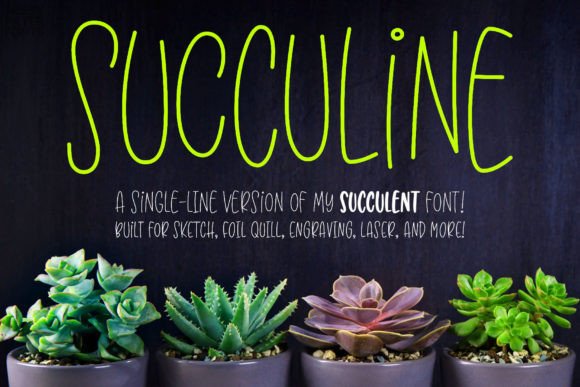
Typography psychology is real. The fonts you choose dictate the mood of your project before a single word is read. Succuline operates in a fascinating space because of its "bouncy" baseline. Unlike traditional fonts where every letter sits perfectly flat on a mathematical grid, the letters in Succuline dance. The uppercase letters, in particular, have a double-stroke effect that mimics the pressure of a felt-tip pen or a brush pen. This visual characteristic instantly communicates warmth, approachability, and creativity.
For a small business owner or a content creator, this is gold. Think about the last time you bought a product because the packaging felt "homemade" in a high-quality way. That is the visual language Succuline speaks. It suggests that there is a human behind the brand, not just an algorithm. Whether you are working on social media graphics, invitations, or packaging design, this font style adds a layer of emotional connection that rigid sans serif fonts often miss. It is a premium font that manages to feel accessible, making it an essential asset for anyone looking to soften their brand identity without losing impact.
Engineering for the Modern Crafter: The "Single Line" Innovation
Here is where Succuline distinguishes itself from the thousands of other script fonts available online. It is not just a static image; it is a functional tool engineered for modern fabrication technology. We are living in an era where digital design bleeds into physical reality through machines like Glowforge, Cricut, and Silhouette. However, standard fonts are designed to be filled with ink. They are outlines. If you try to use a standard display font with a foil quill, an engraving tool, or a sketch pen, the machine will trace the outline of the letter, resulting in a double line that looks messy and unprofessional.
Succuline solves this with its single-line engineering. It is designed specifically for "stroke" work rather than "fill" work. This means if you are a designer using Adobe Illustrator, CorelDRAW, or Affinity Designer, you can apply a stroke and remove the fill entirely. This gives you total control over the weight of the line. You can make it hairline thin for delicate embossing or heavy for bold engraving. For web design and digital products, this opens up possibilities for animated text effects where the font appears to be writing itself out in real-time. It is a creative font built for the future of visual communication.
Practical Application: From Brand Identity to Merchandise
How do you actually use a font like Succuline in your workflow? The versatility is surprising. Because of its PUA encoding (Private Use Areas), you can access all the unique glyphs and swashes in almost any program, even those that don't usually support advanced OpenType features. This makes it incredibly user-friendly for entrepreneurs who might not be typography experts.
Here are a few practical scenarios where Succuline shines:
- Logo Design and Branding: Use it for a primary wordmark for a lifestyle brand. The bouncy nature pairs well with a clean sans serif for the tagline, creating a balanced font pairing that feels modern and grounded.
- Merchandise and Apparel: If you run a print-on-demand shop, this font is perfect for designs that need to look embroidered or hand-drawn. The single-line capability ensures that when you send the design to a plotter for heat transfer vinyl, the cuts are clean and weed easily.
- Editorial Design: In magazines or blogs, use Succuline for pull quotes or section headers. It breaks up the monotony of body text and draws the reader's eye to key messages, improving readability and engagement.
- Special Events: For wedding planners or event coordinators, the font is ideal for laser-cut place cards, engraved glassware, or foil-stamped invitations. The ability to control the stroke weight ensures the text remains legible even on small surfaces.
Mastering the Aesthetic: Pairing and Readability
While Succuline is a showstopper, using a handwritten font requires a bit of strategy to maintain professional presentation. The golden rule of modern typography is contrast. Because Succuline has high energy, texture, and movement, it needs a partner that is calm, structured, and neutral.
Avoid pairing it with other script fonts or overly decorative typefaces; this creates visual chaos and hurts brand recognition. Instead, look for a sturdy serif font for a classic, editorial look, or a geometric sans serif font for a clean, contemporary vibe. For example, if you are designing a menu for a cafe, use Succuline for the section headers like "Coffee" or "Pastries," but use a legible sans-serif for the item descriptions and prices. This hierarchy ensures that your design is not only beautiful but also functional.
Also, consider the medium. On a website, ensure there is enough white space around the text. Script fonts generally require more leading (line height) than block letters to prevent the ascenders and descenders from crashing into each other. When using it for marketing assets like flyers or posters, scale it up. Display fonts like Succuline are meant to be seen. They lose their charm when shrunk down to 10pt body text. Let it be the hero element of your layout.
The Technical Edge: Why Format Matters
For the tech-savvy designer, the value of Succuline lies in its construction. It is provided in formats that are compatible with vector programs, which is crucial for scalability. When you are creating brand identity assets, you need a vector-based font so you can scale it from a business card to a billboard without losing quality.
The fact that it comes in both single-line and hairline versions means you aren't buying a one-trick pony. You are investing in a robust design asset. If you are working in Inkscape or Illustrator, the workflow is seamless: type your text, convert to outlines, and manipulate the path as you see fit. This level of control is what separates amateur designs from professional-grade work. It allows you to customize the kerning and ligatures to fit the specific shape of your logo or layout, ensuring that every letter connects perfectly.
Ultimately, Succuline is more than just a typeface; it is a solution for creators who want to inject personality into their work without compromising on technical precision. Whether you are engraving a custom sign, sketching a planner layout, or building a web design for a new startup, this font provides the tools to make your vision tangible, one beautiful, bouncy line at a time.