Hardly: Where Blackletter Soul Meets Modern Design
You know that moment when you see a typeface that just clicks? It stops you mid-scroll. It makes a product feel more premium, a poster feel more intentional, a brand feel more alive. That’s the kind of quiet power Hardly brings to the table. It’s not just another decorative font—it’s a bridge between the raw, historic energy of blackletter calligraphy and the clean, versatile expectations of contemporary design.
A Typeface with a Story to Tell
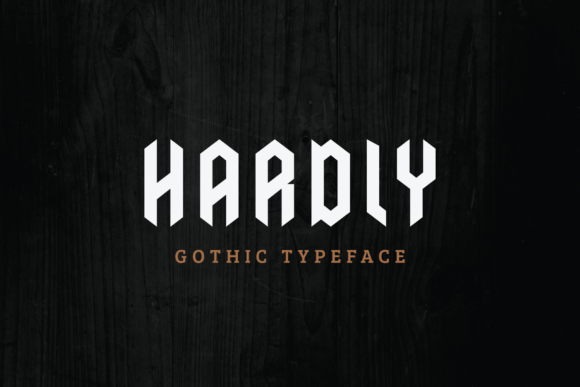
At its heart, Hardly is a modern yet vintage gothic font. Its DNA is inspired by blackletter elements—those dense, ornate letterforms you might associate with old manuscripts, tattoo art, or heavy metal logos. But here’s the twist: Hardly takes that raw, textured history and refines it for today’s creative landscape. The strokes are deliberate, the edges are sharp but not jagged, and the overall feel is one of sophisticated rebellion. It’s the font equivalent of a tailored leather jacket—classic in its roots, but perfectly suited for modern wear.
This duality is what makes it so visually appealing. You get the weight and presence of a premium font without the stuffiness that sometimes comes with traditional serifs. It commands attention without shouting. For designers, that’s a goldmine. It means you can inject personality and a sense of heritage into a project while still maintaining readability and a polished finish.
More Than Just Logos: Real-World Applications
Let’s get practical. Where does a font like Hardly actually shine? The short answer is: anywhere you need a strong visual identity with a touch of edge and elegance.
- Branding & Logo Design: This is where Hardly can become the cornerstone of an entire brand identity. Imagine a craft brewery, a boutique barbershop, a niche apparel line, or a specialty coffee roaster. The font immediately communicates craftsmanship, tradition, and a distinct point of view. It works beautifully for a logotype or as a standalone mark.
- Packaging & Merchandise: On a product label, hang tag, or packaging sleeve, Hardly adds instant shelf appeal. It suggests quality and care—perfect for artisanal goods, spirits, or limited-edition releases. For t-shirt designs or merchandise, it’s a natural fit, offering that sought-after vintage aesthetic that resonates with so many audiences.
- Editorial & Print Materials: Think about the masthead of a magazine, the cover of a book, or the title on a movie poster. Hardly gives editorial design a dramatic, authoritative flair. It’s also excellent for high-impact posters, event flyers, and invitations—anywhere you want to set a tone that’s both classic and cool.
- Digital & Social Media: In the fast-paced world of social media graphics, standing out is everything. Using Hardly for quotes, headers, or key promotional text can make your content instantly recognizable. It’s a fantastic tool for content creators and marketers looking to build a cohesive visual language across Instagram, Pinterest, or YouTube thumbnails.
- Web Design & Digital Products: While it’s a display font best used for headlines and accents, Hardly can anchor a website’s hero section or be used strategically in web design to highlight key calls-to-action or section titles. For digital products like ebook covers or online course graphics, it adds a layer of professional depth.
The Practical Side: Pairing, Readability, and Licensing
Finding a beautiful font is one thing. Using it effectively is another. Here’s how to integrate Hardly into your workflow without a hitch.
Font Pairing is Your Best Friend. Because Hardly has such a strong personality, it pairs best with simpler, cleaner typefaces. A classic sans serif font like Montserrat, Open Sans, or even a geometric sans can create a beautiful contrast. For a more traditional feel, a simple, highly readable serif font like Lora or Merriweather can work well. The key is balance: let Hardly be the star for your headlines, and let its partner handle the body text. Avoid pairing it with other ornate script fonts or handwritten fonts unless you’re going for a very specific, maximalist aesthetic—it can quickly become visually noisy.
Readability Considerations. This is a creative font designed for impact, not for long paragraphs of body copy. Use it for titles, headers, logos, short quotes, and accent text. At larger sizes, its details are a feature. At smaller sizes or in long blocks, they can become a hindrance. Always test your design at the intended viewing size—whether that’s on a mobile screen or a printed poster.
Explore the Included Styles. A good typeface like Hardly often comes with more than one weight or style. Check if it includes a regular, bold, or alternate character sets. These variations give you more flexibility to create hierarchy and emphasis within your designs without needing another font, which greatly aids in achieving visual consistency.
Understand the License. If you’re using Hardly for a client project, a product you sell, or business branding, you need to ensure you have the correct commercial font license. The license that comes with a free download often only covers personal use. For commercial projects, investing in the proper license from the foundry or distributor is non-negotiable. It protects you legally and supports the type designers who create these invaluable design assets.
Making the Decision: Is Hardly Right for Your Project?
Choosing a font is a strategic decision. Ask yourself: what is the core feeling I want my project to evoke? If the answer involves words like heritage, craft, edge, authenticity, or sophisticated grit, then Hardly is a strong candidate.
It’s a font that doesn’t just decorate—it communicates. For the small business owner building a brand from the ground up, it offers instant character. For the graphic designer, it’s a versatile tool in the toolkit. For the creative entrepreneur, it’s a way to visually articulate a unique value proposition.
Don’t just take my word for it. Download a test version (if available) and mock it up. See how it feels next to your imagery, your color palette, and your other typographic choices. The right font doesn’t just look good on a specimen sheet; it feels right in the context of your specific vision. Hardly has the rare ability to honor the past while confidently striding into the present—and that might be exactly the voice your next project needs.