Comic Hero: Unleashing Playful Energy in Your Designs
Ever stare at a blank canvas for a children's book cover or a new product label, knowing you need something that screams "fun" but feels professionally crafted? That sweet spot between whimsical and polished is surprisingly hard to hit. You want a typeface that has personality, that jumps off the page, but one that doesn't sacrifice legibility or look amateurish. This is where the right display font becomes your secret weapon, transforming a good design into one that truly connects with its audience.
More Than Just a Playful Typeface
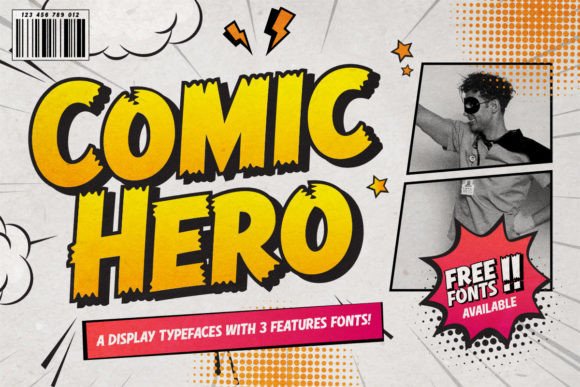
At its core, Comic Hero is a display font built on a foundation of strong, clear lines. Its letterforms carry a subtle bounce and rounded edges, injecting a sense of movement and approachability. Think of the confident, clean lettering you see on a well-loved graphic novel title or the logo for a family-friendly entertainment brand. It’s this balance that makes it so versatile. The font avoids the overly casual, sometimes messy look of traditional "comic" fonts, opting instead for a more refined aesthetic. This makes it a premium font choice for projects that need to appeal to both kids and the adults who are often the actual purchasers.
The visual appeal lies in its confident strokes and slightly exaggerated proportions. Each character feels intentional, designed to hold its own in a headline or as a standalone logo mark. It’s a creative font that doesn’t try to be everything at once; instead, it masters a specific, highly usable vibe: energetic, trustworthy, and inherently engaging.
Where This Font Truly Shines: Practical Applications
Theory is nice, but let's talk about real-world use. Where does a typeface like Comic Hero deliver the most value? Its strengths are evident across a wide range of creative and commercial projects.
- Branding & Logo Design: For brands targeting families, children, or anyone seeking a friendly, dynamic identity, this font can be the cornerstone. Imagine a logo for a kids' sports league, a creative workshop, or a playful café. Its inherent personality helps build immediate brand recognition.
- Packaging & Merchandise: On a shelf or in an online store, you have seconds to grab attention. The bold, clear nature of Comic Hero makes it perfect for product names on snack packaging, toy boxes, or apparel. It ensures your key message is read and remembered, which is crucial for packaging design.
- Editorial & Print Materials: Book covers, especially for middle-grade novels, graphic novels, and educational materials, benefit immensely. The font sets the tone instantly. It’s also excellent for chapter headings in magazines, poster headlines for events, or vibrant invitations that need a burst of energy.
- Digital Presence: In the fast-scrolling world of social media, a distinctive headline font stops the thumb. Use it for Instagram post titles, YouTube thumbnails, or blog headers to create a consistent and recognizable visual style. On websites, it works beautifully for hero section headings, call-to-action buttons, and other key web design elements where you want to inject personality without compromising site speed or clarity.
Making It Work: Pairing and Readability Tips
Choosing a bold display font is just the first step. Using it effectively requires a bit of strategy. Here’s some practical advice for integrating a font like Comic Hero into your projects.
Font Pairing is Key. A high-energy display font needs a calm, reliable partner. For body text, pair it with a clean, highly readable sans serif font or a simple serif font. This creates a visual hierarchy where the display font commands attention for headlines, and the companion font ensures longer passages of text are easy on the eyes. Avoid pairing it with another overly decorative or script font, as this will create visual chaos.
Consider the Context. Always test your font choices at the actual size they will be used. A font that looks great as a 72-point headline might become illegible at 12 points for a subheading. For digital projects, check rendering across different devices. For print, always get a physical proof. This step is non-negotiable for professional presentation.
Explore the Font Family. A good commercial font often comes with more than one weight. Check if your Comic Hero license includes variations like Regular, Bold, or even Italic. Using different weights from the same family is a simple way to add depth and emphasis to your designs while maintaining perfect visual consistency—a core tenet of strong brand identity.
Licensing Matters. Before you use any font for a client project or merchandise you intend to sell, double-check the license. A premium font for commercial use will have clear terms. Understanding these terms upfront protects you and your client and is a mark of a professional designer.
A Tool for Connection
Ultimately, typography is about communication. A font like Comic Hero does more than just spell out words; it conveys an emotion, sets a scene, and tells a story before the reader even processes the first sentence. It’s a design asset that can bridge the gap between a project that feels generic and one that feels specifically crafted for its audience. Whether you're a small business owner designing your own packaging, a content creator building a brand on social media, or a designer working on an editorial layout, having a versatile, high-quality display font in your toolkit is invaluable. It’s about giving your ideas a voice that is as strong and playful as the concepts themselves.